

Whirlpool ($WHR): The Bondholder Survival Toolkit
Fifteen months after the fallen angel, the bonds finally got cheap. Which ones got cheap enough?

A fallen angel is supposed to be a bargain. That’s the whole trade, forced sellers dump the paper when the IG ratings go, the yield-hungry pick it up, everybody knows the pattern.
Whirlpool downgraded to HY in mid-2025 and the pattern broke. Housing stayed dead, competitors dumped Asian inventory ahead of tariffs and discounted it to nothing, and Whirlpool’s American factories, the thing that was supposed to be the “moat,” couldn’t hold price. Margins collapsed, the dividend got halved and then killed, and by June the company that used to be a boring BB with a boring unsecured stack had raised $2 billion of secured bonds, layering the legacy bondholders.
The turnaround case is not out of the question. Pricing is finally flowing through, the cost program is tangible, and the second half might actually show it. But the capital structure isn’t the one those legacy holders bought, and it can keep moving against them, legally, indefinitely, without anything most people would call a credit event. Somewhere in this stack is the right bond at the right price.
Situation Overview
Whirlpool is one of the last US-headquartered appliance manufacturers of scale, selling under the Whirlpool, Maytag, KitchenAid, JennAir and Amana brands in the US, Brastemp and Consul in Brazil, and InSinkErator in disposals.

Following the de-consolidation of Europe and India, the business now operates through 3 segments: North American major appliances, Latin American major appliances, and a global small domestic appliance franchise built around KitchenAid.
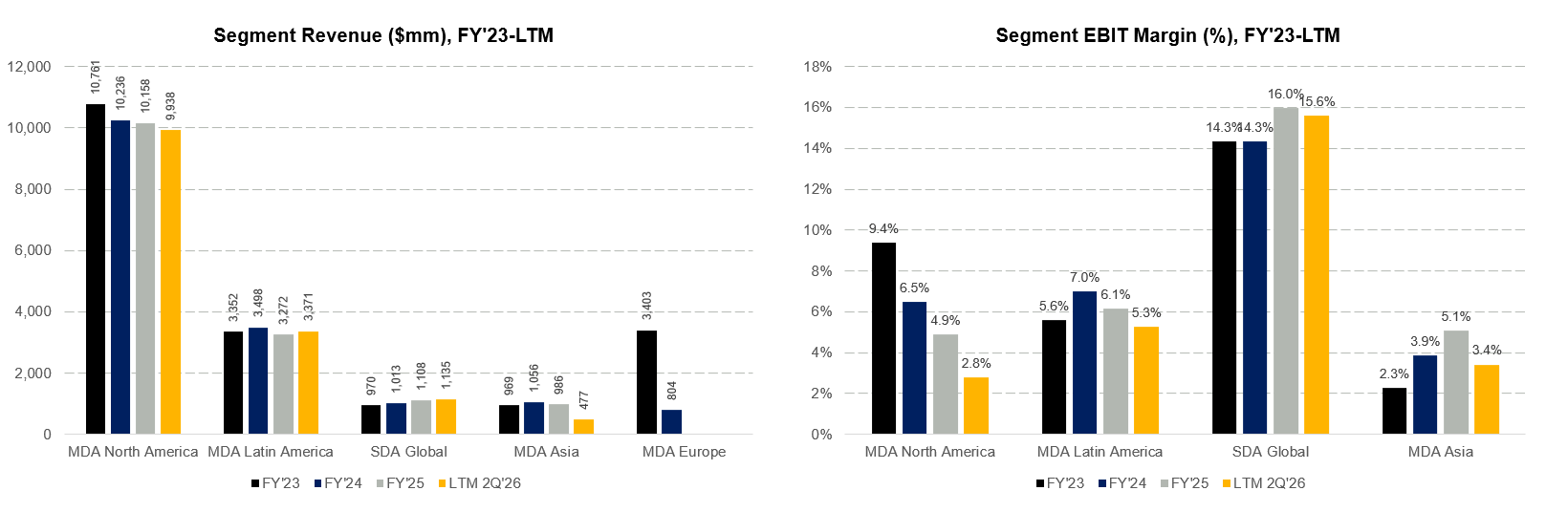
Twelve months ago this was an overlevered but conventionally financed BB credit. Then mid-2025 arrived and the IG ratings went with it. Housing turnover stayed weak, the consumer stayed soft, and competitors who’d pulled Asian inventory into the US ahead of tariffs started discounting aggressively to clear it. Whirlpool makes its machines in America but a domestic footprint can’t support pricing when everyone else is discounting.
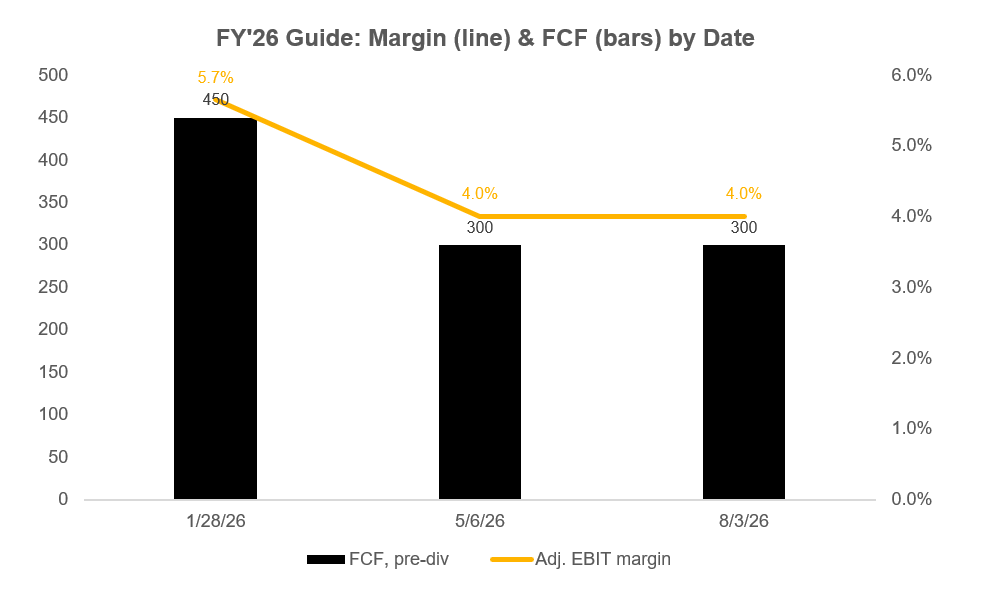
The deleveraging plan kept slipping through 3Q’25. Management cut FY’25 ongoing EBIT margin guidance to ~5.0% from 5.7% and took the FCF outlook to ~$200mm from ~$400mm after burning $900mm+ of cash through the first 9 months. The dividend had already been halved. The path back to the 2.0-3.0x leverage target still depended on an earnings recovery, asset sales and a housing rebound, and none of it arrived on schedule.
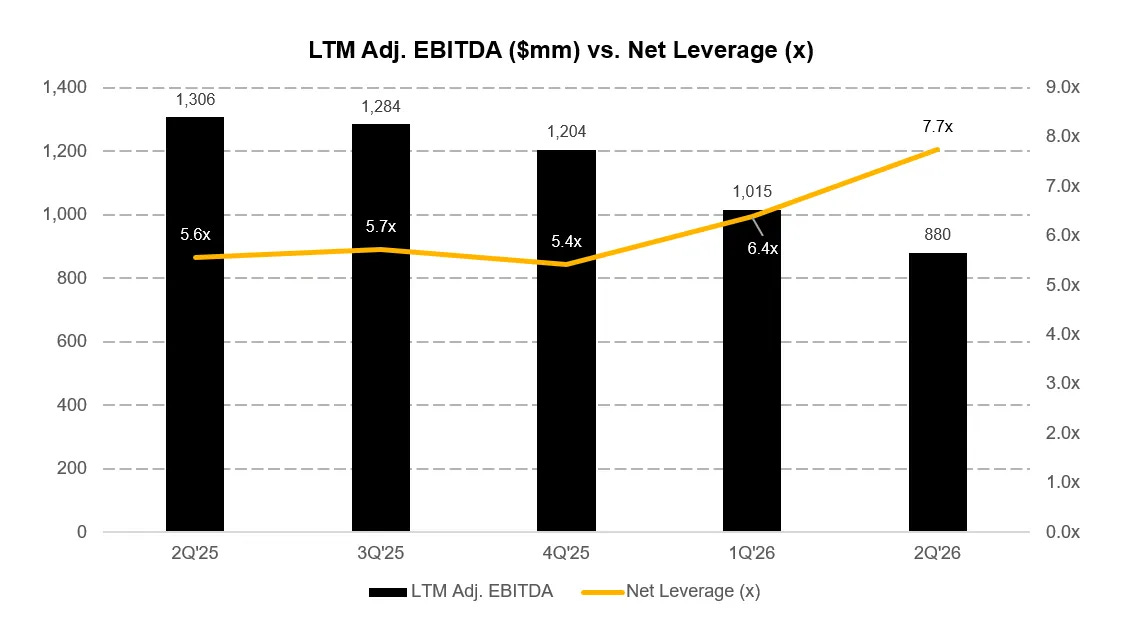
The first real balance-sheet action came through India. Whirlpool sold ~14mm shares for ~$198mm in Nov-25, cutting its stake from ~51% to 40% and de-consolidating the business. The company ended the year with ~$6.6bn of total debt and entered FY’26 with a recovery plan built on pricing, $150mm+ of cost actions and easing promotions. Common equity and mandatory convertible preferred issuance bought additional runway.
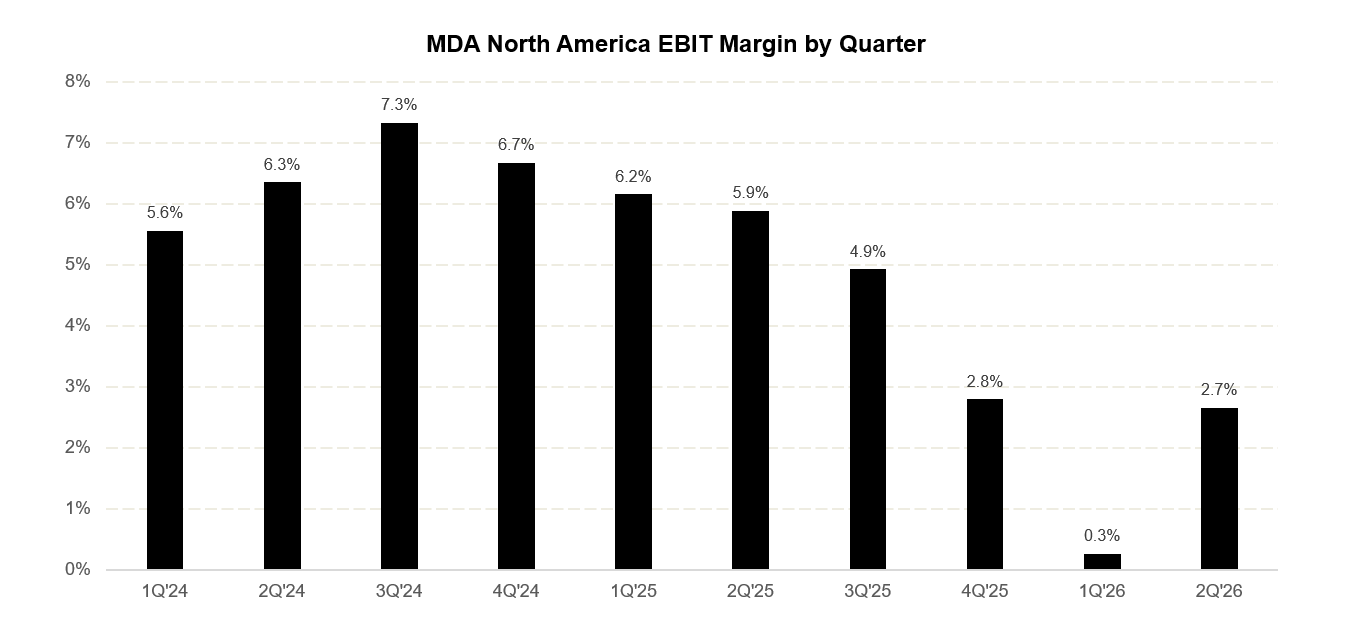
Then 1Q’26, when things really broke. Ongoing EBIT margin collapsed to 1.3%, and North American MDA, the segment that is the company, earned 0.3%. Management cut revenue guidance to ~$15bn, took the ongoing EBIT margin target to ~4.0% from 5.5-5.8%, lowered the FCF guide to >$300mm from $400-500mm, and killed the common dividend entirely.
June fixed the potential covenant-breach and reordered the capital structure permanently. A $2.0bn first-lien ABL replaced the unsecured revolver, and $2.0bn of second-lien notes, the 7.50% ‘31s and 7.875% ‘34s, termed out the near maturities. The runway now runs through 2028.