Globalstar ($GSAT) just got bought. Is Iridium ($IRDM) Next?
Decomposing Amazon's $12 billion check and what it means for the last independent L-band operator
Globalstar just got bought.
Amazon signed the deal on Monday. $11.6 billion. A 117% premium to where the stock traded before the rumors started. A 5x+ bagger from its 2-year lows.
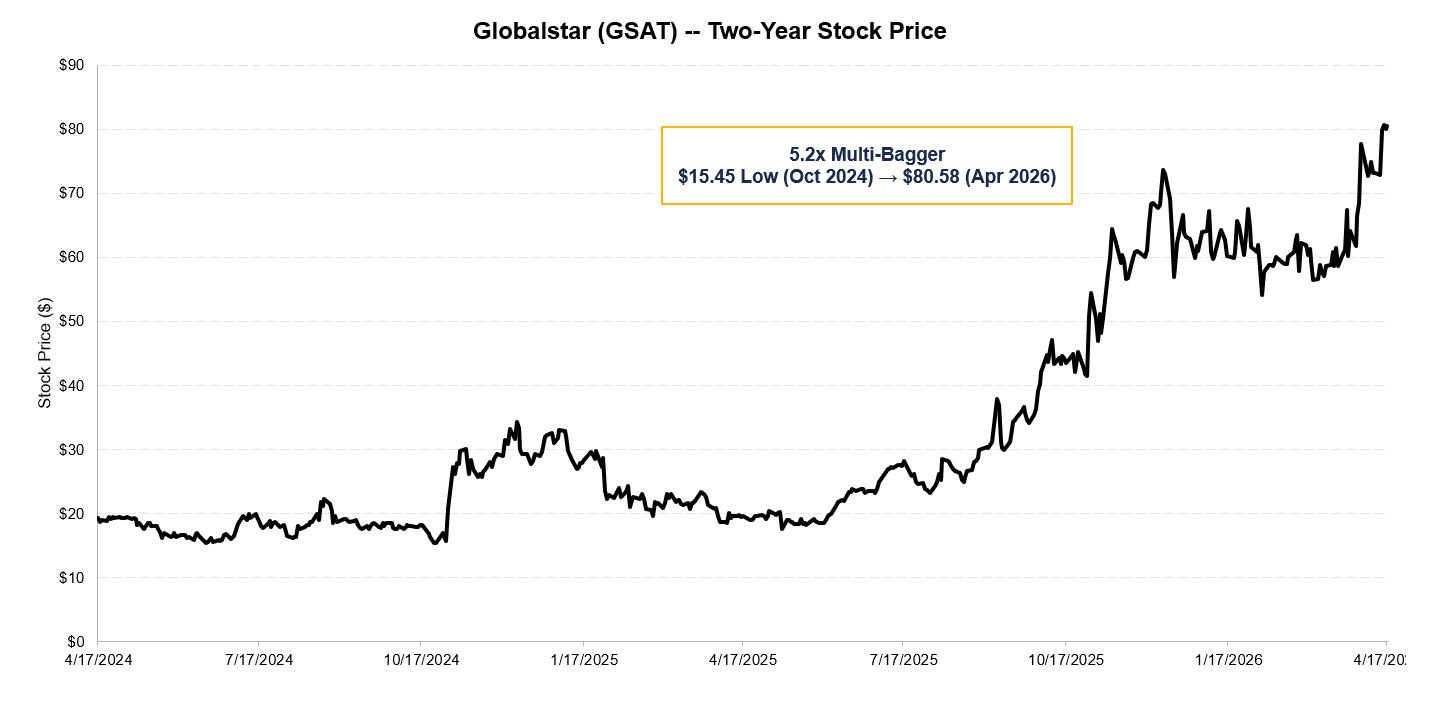
So the trade worked. Now what? Who’s next?
That’s the only question that matters when a deal like this prints. Globalstar has spectrum, a functioning D2D network with Apple, and an independent corporate structure. Amazon wanted all three badly enough to pay 88x EBITDA.
So you run down the list. Viasat. AST. Iridium. NextNav. They’ve all rallied. Everybody with a Bloomberg terminal figured out the same thing at the same time. Satellite spectrum is an asset that can’t just be printed, and the buyers are lining up.
One name kept coming back. Iridium. Global L-band operator. Spectrum block sitting adjacent to the one Amazon just bought. Independent. Publicly traded. The only other player in the world who can claim globally harmonized L-band authorized for safety-of-life services.
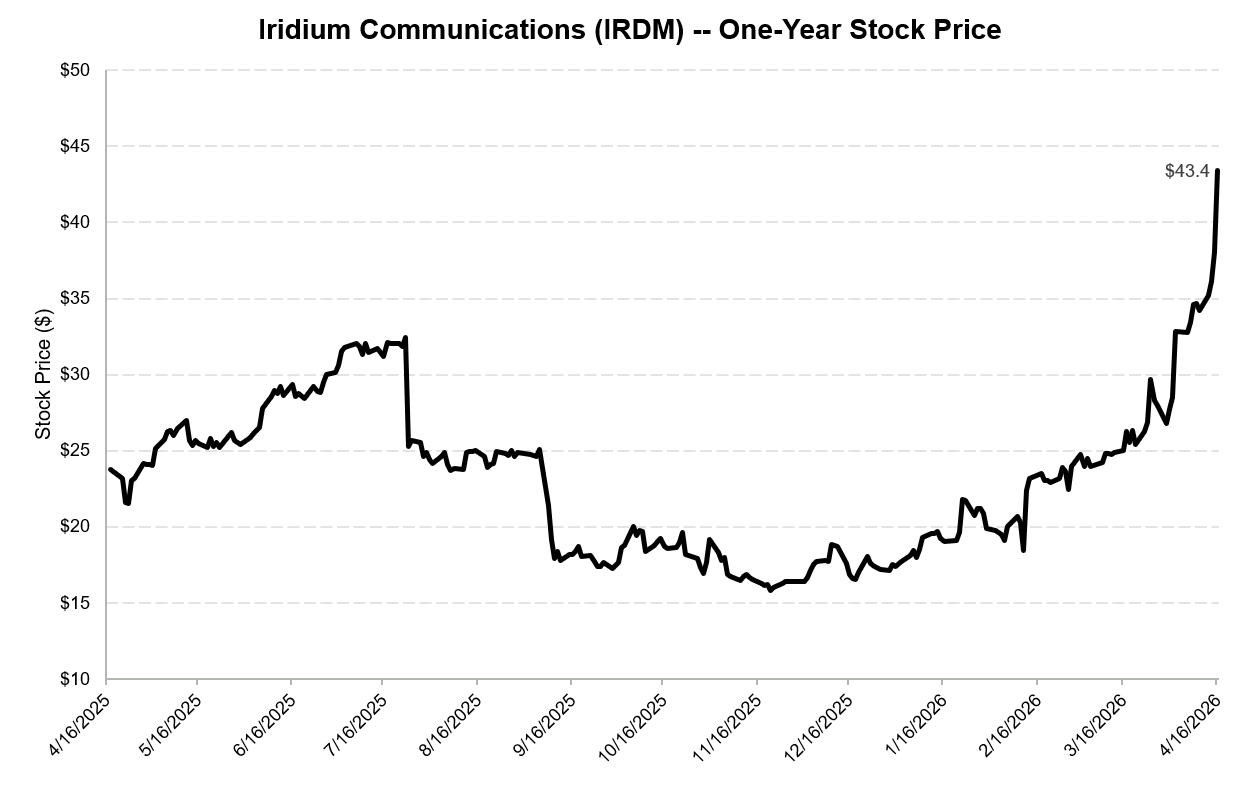
I started writing this two days ago. IRDM was at $36. The stock is $43 as I’m writing this. Up 14% yesterday. Up 20% over two sessions. A 52-week high. Every investor who saw the headline ran the same math and the easy entry is gone.
So here’s the real question. Is this a buy? Or is this post 3 days too late?
What Amazon Actually Paid For
Before getting to Iridium, a quick decomposition of the Globalstar deal, because the comp is what the IRDM 0.00%↑ math hinges on.
At ~$12 billion of enterprise value, Globalstar was acquired at roughly 88x current EBITDA. Nobody pays 88x for this operating business. Amazon paid for spectrum and the Apple relationship. The question is how to allocate the $12 billion across the assets in the package.
Globalstar holds three distinct spectrum assets:
8.725 MHz of L-band for satellite uplink;
16.5 MHz of S-band for satellite downlink; and
A 11.5 MHz subset of the S-band that’s been authorized for terrestrial use and standardized by 3GPP as Band 53 for LTE and 5G.

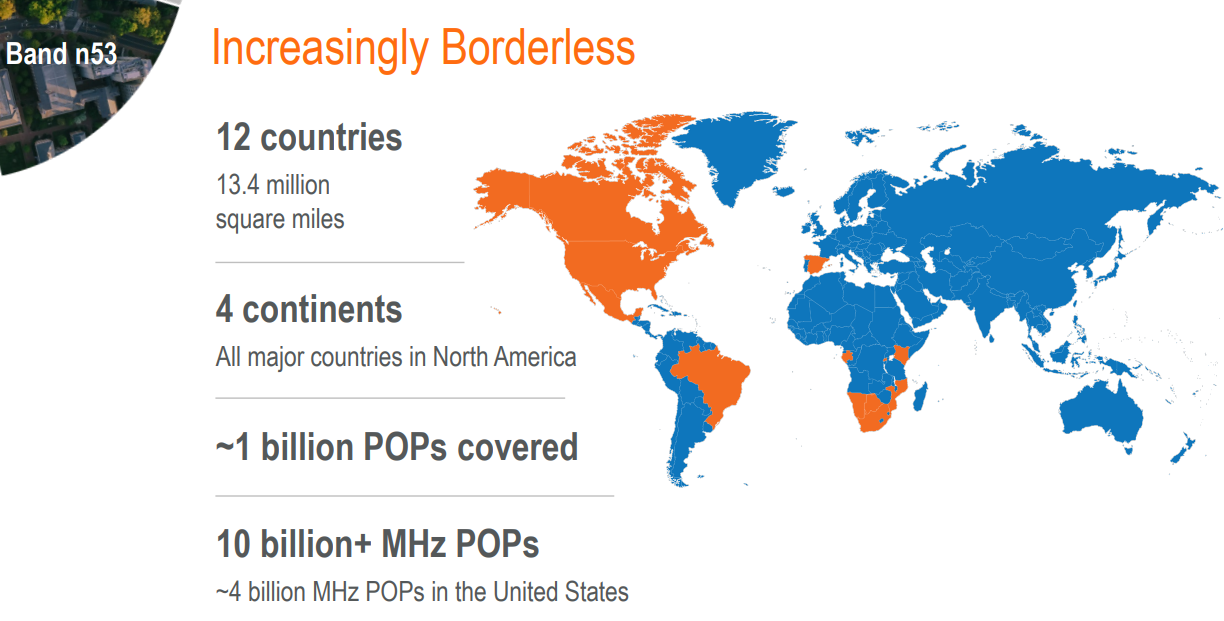
Band 53 is the most strategically interesting piece. It’s a rare block of carrier-grade mid-band spectrum not owned by any wireless operator, deployable in 12 countries, with Qualcomm chipset support, Nokia and Airspan radios, and a proprietary 5G RAN platform targeting industrial and defense applications.
Globalstar’s own Analyst Day framed Band 53 against U.S. terrestrial spectrum precedents of $0.21 to $3.16 per MHz-POP, with management pointing to a valuation range of $0.50 to $2.00 per MHz-POP on 10 billion-plus global MHz-POPs. That math implies $5 billion on the low end, $10 billion-plus on the high end.
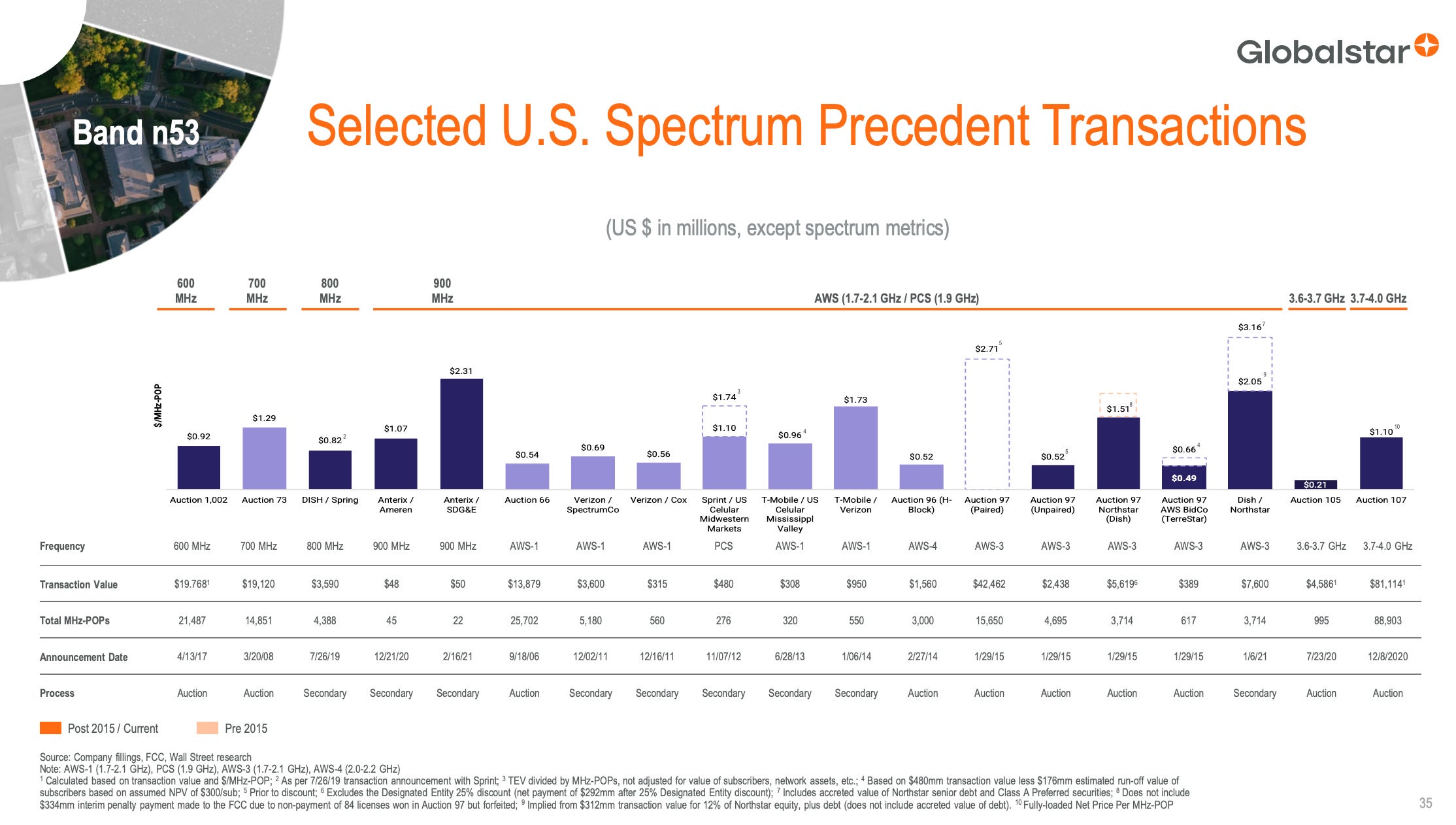
Worth being honest that these numbers are aspirational. Band 53 has one commercial deployment today (a retailer’s micro-fulfillment center). Anchoring to global MHz-POPs treats footprints that aren’t generating revenue as if they were.